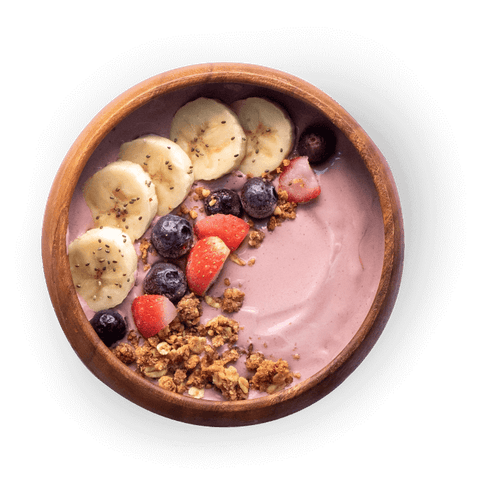
Smoothies are one of the simplest ways to pack fruit, vegetables, plant protein and other nutrient-dense ingredients into a single glass. They take just minutes to make, adapt to almost any taste, and work as breakfast, a snack, or a post-workout pick-me-up.
That convenience is exactly why smoothies show up so often in weight-loss diets. But blending ingredients together doesn't automatically make a drink healthy. A smoothie built from berries, plant protein and a spoon of chia is a completely different food from one loaded with several fruits, juice, syrup, nut butter, coconut cream and a pile of toppings.
If weight loss is your goal, a smoothie needs to fit into your day the same way any other meal or snack does — its ingredients, portion size and purpose all matter. The good news: getting it right is easy once you build your smoothie around a few complementary components.
What Makes a Healthy Smoothie for Weight Loss?
There's no single "correct" smoothie recipe — but a strong starting formula includes:
- A liquid base
- One or two fruits and/or vegetables
- A source of plant protein
- An ingredient for fibre and texture
- Optional: a small amount of nuts, seeds, avocado or nut butter
- Cocoa, spices or superfood powders for flavour
This structure gives you room to change things up daily without overcomplicating any single recipe — and it makes it much easier to see exactly what's going into your glass.
Step 1: Start With a Simple Liquid Base
Plain water makes a light, refreshing smoothie. For a creamier result, try an unsweetened plant-based drink — almond, oat, coconut or rice — which pairs especially well with banana, berries, cocoa and protein powders.
The amount of liquid you use changes the whole experience: less liquid creates a thick, meal-like smoothie, while more liquid makes a lighter drink.
Bettr-Food offers a range of plant-based drinks that work well as a smoothie base alongside fruit, proteins and superfoods.
Step 2: Choose Fruit (and Vegetables) for Flavour, Not Just Sweetness
Fruit gives a smoothie its personality. Banana adds creaminess, berries bring freshness and tartness, mango and pineapple create a tropical flavour, and apple, pear and kiwi work well in lighter blends.
Vegetables can be added without turning your smoothie into a liquid salad — cucumber adds freshness, spinach blends in seamlessly, and carrot or beetroot pair beautifully with apple, berries and citrus.
For everyday smoothies, one main fruit plus a second fruit or vegetable is usually enough:
- Berries + banana
- Apple + cucumber
- Mango + carrot
- Kiwi + spinach
- Pineapple + cucumber
Piling in five different fruits doesn't make a smoothie better — it just makes it sweeter and harder to portion.
Step 3: Add Plant Protein for a More Substantial Smoothie
Fruit and liquid alone can make a great light snack. But when you want your smoothie to function as breakfast or fuel a longer stretch of your day, plant protein makes it far more satisfying.
Popular plant-based options include:
- Pea protein
- Rice protein
- Hemp protein
- Pumpkin seed protein
- Multi-source protein blends
Plant protein requires no extra prep — just blend it straight in. Different sources also change the taste and texture, so it's worth experimenting to find your favourite.
Bettr-Food carries a dedicated range of organic plant proteins designed to combine easily with fruit, plant drinks, cocoa and other smoothie staples.
Step 4: Add Fibre for Texture and Staying Power
Whole fruit already provides some fibre, but oats, chia seeds and ground flaxseed add more texture and make a smoothie feel heartier.
Good fibre-boosting options:
- Rolled oats
- Chia seeds
- Ground flaxseed
- Berries
- Whole fruit
- Seeds
You don't need all of these at once — a spoonful of oats might be all a banana-cocoa smoothie needs, chia pairs especially well with berries, and flaxseed works nicely in a simple fruit-and-protein blend. These ingredients also absorb liquid, so give your smoothie a minute after blending before adjusting the thickness.
Step 5: Use Nuts, Seeds and Nut Butter for Creaminess
Nut butter, avocado, nuts and seeds can transform a smoothie's texture. A little peanut or almond butter pairs beautifully with banana, cocoa or berries, while avocado creates ultra-smooth consistency without much added sweetness.
You don't need to avoid these ingredients — just treat them as a deliberate part of the recipe rather than a free extra. If your smoothie already has oats, chia and plant protein, a small amount of nut butter is often plenty.
Do You Need to Add Sweetener?
Often, ripe fruit is sweet enough on its own — banana, mango and dates can noticeably sweeten a smoothie, especially with a creamy plant drink base.
If you prefer more sweetness, a small amount of date powder, agave syrup, coconut sugar or maple syrup can help. These are useful flavour adjusters, but they still add sugar and calories, so use them sparingly — particularly if your smoothie already contains several sweet fruits.
Bettr-Food's organic natural sweeteners — including date powder, coconut sugar and erythritol — are handy for the times a recipe genuinely needs a touch more sweetness.
Where Do Superfoods Fit In?
Smoothies are one of the easiest places to experiment with superfoods. Cocoa turns a banana smoothie into a dessert-like treat, matcha adds a distinctive tea flavour, and spirulina brings vivid colour and taste. Maca, berry powders, chia and flax can all be worked into different combinations.
Try pairing just one per smoothie:
- Cocoa with banana
- Matcha with mango
- Berry powder with raspberry or blueberry
- Maca with banana and nut butter
- Spirulina with pineapple or apple
There's little benefit to stacking five powders into one glass — spread the variety across the week instead.
How a "Healthy" Smoothie Becomes a Calorie Bomb
Smoothies have a reputation for being light, simply because they're liquid. In reality, ingredients can add up fast.
A smoothie with banana, dates, fruit juice, oats, nut butter, avocado, seeds and syrup uses individually "healthy" ingredients — but together, they create something very different from a simple blend of berries, plant protein and a plant drink.
A few habits keep your smoothie in check:
Use juice sparingly. Since the smoothie already contains fruit, juice is rarely needed as the main liquid — water or an unsweetened plant drink adds volume without extra sugar.
Pick one main source of sweetness. If your smoothie already has ripe banana or mango, taste it before reaching for dates, agave or syrup. Often nothing else is needed.
Don't add every "healthy" ingredient at once. Oats, chia, avocado, nut butter and seeds are all useful — but they don't all belong in the same glass. Pick what fits the recipe you're making.
Watch your portion size. A smoothie can be a small snack or a full breakfast depending on its size and ingredients. A large bottle can easily contain several servings of fruit and multiple energy-dense add-ins, even though it's far easier to drink than to eat the same ingredients separately.
Smoothie vs. Juice: What's the Difference?
The key difference is preparation. A smoothie blends whole fruit and vegetables together, keeping the pulp and fibre in the drink. Juicing, by contrast, separates most of that solid material out.
This is why smoothies pair so naturally with whole fruit, vegetables, oats, seeds and plant protein — and why a thicker, slower-sipped smoothie tends to feel more like a meal than a thin, quickly-gulped one.
If your smoothie regularly leaves you hungry soon after, try adjusting the recipe rather than just making a bigger one — a bit more plant protein, oats or chia can make a real difference.
The Best Order to Add Ingredients to Your Blender
- Add the liquid first.
- Add soft fruit and vegetables.
- Add protein powder, oats, seeds or other powders.
- Add leafy greens.
- Finish with frozen fruit and ice.
Blend until smooth, adding a splash more liquid if needed. This order helps most blenders pull ingredients toward the blades more efficiently — especially with frozen fruit.
4 Easy Weight-Loss Smoothie Recipes
Berry & Plant Protein Smoothie
- Unsweetened plant drink
- Mixed berries
- Plant protein
- Chia or ground flaxseed
- Cinnamon
The berries carry the flavour, while protein and chia add body.
Banana & Cocoa Smoothie
- Unsweetened plant drink
- Banana
- Plant protein
- Cocoa powder
- A small amount of oats
Naturally creamy, and usually needs little or no added sweetener.
Fresh Green Smoothie
- Water or unsweetened plant drink
- Kiwi or green apple
- Cucumber
- A small handful of spinach
- Plant protein
- Lemon or lime juice
The fruit keeps things fresh, while spinach stays a supporting player rather than the star.
Creamy Berry Smoothie
- Plant drink
- Berries
- A small amount of avocado
- Plant protein
- Chia seeds
Adjust the avocado and chia to control thickness.
Smoothies, "Detox" and "Fat-Burning" Claims
Ingredients like ginger, cinnamon, chilli, matcha or grapefruit add great flavour and variety — but they don't make a smoothie "fat-burning," and a smoothie doesn't need a "detox" label to be nutritionally useful.
For weight loss, results come down to your overall eating pattern and energy balance over time. A well-composed smoothie is simply one convenient piece of that bigger picture.
When's the Best Time to Drink a Smoothie?
There's no single ideal time:
- Breakfast: benefits from a fuller composition — fruit or vegetables, plant protein, and a fibre source.
- Snack: can be much simpler.
- Post-workout: combine plant protein with fruit or oats for a mix of protein and carbs in an easy-to-digest format.
The right choice depends on what you've already eaten, what's coming later, and how hungry you are.
Can a Smoothie Replace Breakfast?
Yes — as long as it's built like a meal. A smoothie made from just fruit and water is very different from one with fruit, plant protein, oats or seeds, and a plant drink. If smoothies are a regular breakfast for you, rotate the ingredients through the week to keep both flavour and nutrition varied.
Frequently Asked Questions
Are smoothies good for weight loss? They can fit into a weight-loss diet when the ingredients and portion match your overall food intake — but they aren't inherently slimming on their own.
What should I put in a weight-loss smoothie? Start with a liquid base, one or two fruits/vegetables, plant protein, and one fibre ingredient like oats, chia or ground flaxseed.
Do I have to avoid bananas? No. Banana adds natural sweetness and creaminess and fits well into a balanced smoothie. The full recipe and portion size matter far more than any single fruit.
Is protein powder necessary? No — it's optional, but useful when you want a more substantial smoothie or extra protein.
Is a green smoothie healthier than a fruit smoothie? Not necessarily. The full ingredient combination matters more than the colour of the drink.
Can I add nut butter? Yes — a small amount of peanut, almond or other nut butter adds flavour and creaminess, especially in a smoothie that's otherwise light.
Should I add sweetener? Taste first. Ripe fruit often provides enough sweetness on its own; add a small amount of your preferred sweetener only if needed.
Can I prepare a smoothie the night before? Yes — store it in a sealed container in the fridge. Some separation or colour change is normal, so stir or shake before drinking.
The Bottom Line
A great weight-loss smoothie doesn't need a complicated recipe. Pick a flavour you enjoy, keep the ingredient list focused, and decide whether you want something light, a snack, or a full breakfast.
Fruit and vegetables form the base, plant protein adds substance, oats or seeds bring texture, and superfoods or natural sweeteners can be used selectively for variety. Keep it simple, and your smoothie will fit naturally into your day — without becoming either a miracle cure or an overly restrictive chore.